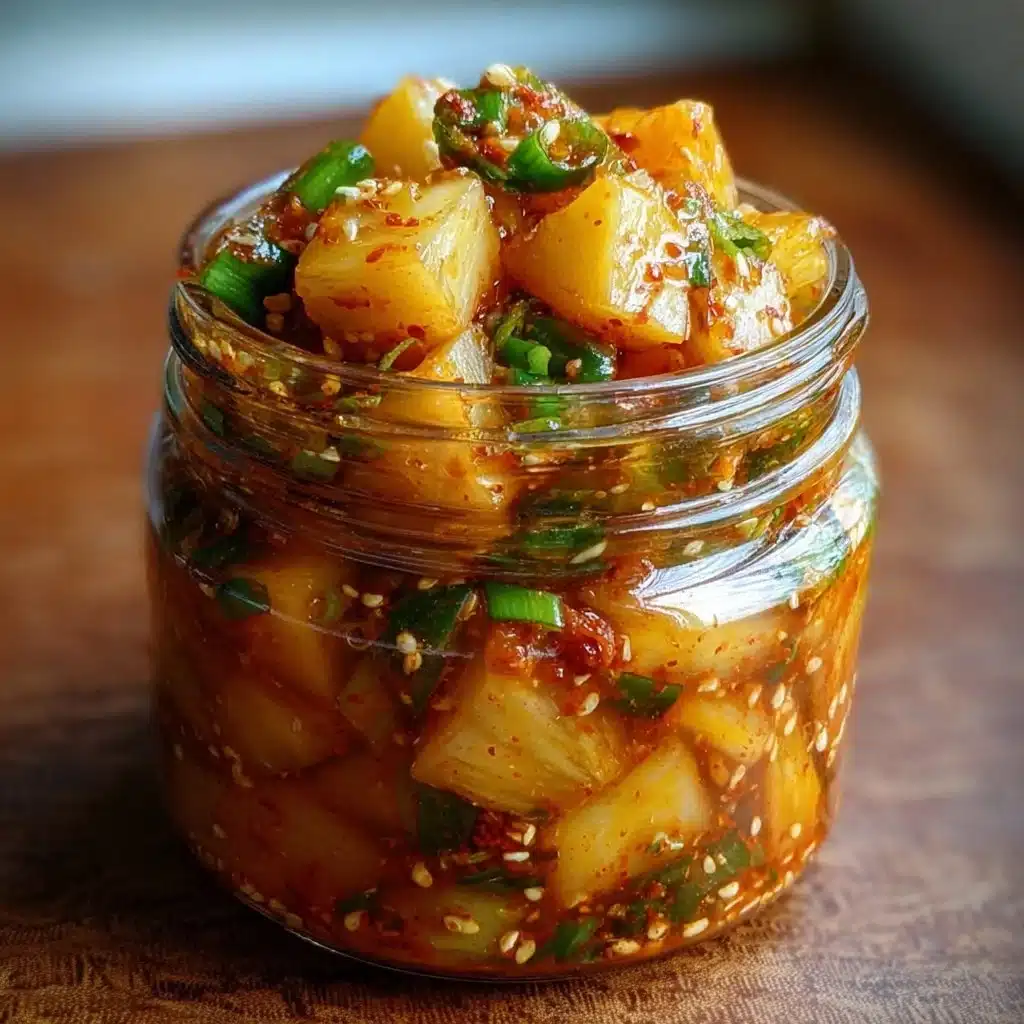
Fermented Pineapple Kimchi is a delightful twist on traditional kimchi that features a sweet and spicy flavor profile. The bright yellow hue of the pineapple, paired with the vibrant red of gochugaru, creates a visually stunning dish that’s perfect for any gathering. Serve it at a summer barbecue, a cozy family dinner, or even as a unique starter at a dinner party to impress your guests with its unexpected flavor.
This flavorful dish provides a rich sensory experience—enjoy the crunch of the fresh pineapple and the umami depth from the fish sauce, combined with aromatic garlic and ginger. In this article, we’ll guide you through the easy steps of making your own Fermented Pineapple Kimchi at home, covering everything from ingredient selection to serving ideas. Let’s dive in!
Why You’ll Love This Recipe
- Fresh Ingredients: Use ripe, juicy pineapple for maximum flavor.
- Ease of Preparation: Simple steps make it accessible for all skill levels.
- Nutrition: Packed with vitamins and good probiotics for gut health.
- Versatility: Enjoy it as a side dish, condiment, or even in salads.
- Presentation: The vibrant colors make a striking addition to your table.
With these reasons, you’ll surely want to try this exciting recipe!
Preparation and Cooking Time
- Total Time: 24 hours (including fermentation)
- Preparation Time: 20 minutes
- Cooking Time: 0 minutes (no cooking needed)
Ingredients You’ll Need
To create your Fermented Pineapple Kimchi, start by selecting the right ingredients:
Fresh Pineapple
- What to Use: One medium fresh pineapple (or canned pineapple in juice for a quicker option).
- Preparation: Peel, core, and chop the pineapple into bite-sized pieces.
- Substitutions: If you’re looking for an alternative, you can use canned pineapple.
- Tip: Choose a ripe pineapple for optimal sweetness.
Garlic
- What to Use: Three cloves of garlic (adjust for milder taste).
- Preparation: Mince the garlic finely to help intensify the flavors.
- Substitutions: If you’re looking for an alternative, garlic powder can work but won’t have the same punch.
- Tip: Use fresh garlic for better flavor.
Green Onions
- What to Use: Four stalks of green onions (chives can be a gentler alternative).
- Preparation: Chop the green onions into small pieces.
- Substitutions: If you’re looking for an alternative, use chives for mild flavor.
- Tip: Both white and green parts are edible and add flavor.
Fish Sauce
- What to Use: Two tablespoons of fish sauce (for a vegetarian option, swap with soy sauce or miso paste).
- Preparation: Measure out the fish sauce for your kimchi.
- Substitutions: If you’re looking for an alternative, soy sauce gives a similar taste.
- Tip: Be mindful of the saltiness in fish sauce when adding more salt.
Gochugaru (Korean Red Pepper Flakes)
- What to Use: Two tablespoons (adjust for heat level).
- Preparation: Measure the gochugaru for a spicy kick.
- Substitutions: If you’re looking for an alternative, use red pepper flakes but adjust the quantity.
- Tip: The quality of gochugaru impacts the overall flavor!
Ginger
- What to Use: One tablespoon of fresh ginger (or ground ginger in a pinch).
- Preparation: Grate the fresh ginger finely.
- Substitutions: If you’re looking for an alternative, ground ginger is okay but less fresh-tasting.
- Tip: Peel the ginger before grating for the best flavor.
Salt
- What to Use: One teaspoon for fermentation (2% of the total weight of pineapple and water).
- Preparation: Measure salt needed for both the pineapple and brine.
- Substitutions: No substitutes for fermentation; use kosher or sea salt.
- Tip: Don’t use table salt as it contains additives.
Water
- What to Use: Two cups of filtered water.
- Preparation: Measure the water for the fermentation process.
- Substitutions: Avoid alternatives; filtered is best to ensure clarity.
- Tip: It’s best to warm the water slightly to dissolve the salt.
Step-by-Step Instructions
Making Fermented Pineapple Kimchi is a straightforward, one-pot process that requires minimal fuss. Follow these simple steps:
Step 1: Prepare the Pineapple
Start by peeling, coring, and chopping the medium pineapple into bite-sized pieces. This ensures each piece can absorb the flavors during fermentation.
Step 2: Mince Aromatics
Finely mince three cloves of garlic and one tablespoon of fresh ginger. These ingredients will heighten the kimchi’s depth of flavor. The smaller the pieces, the more intense the flavor!
Step 3: Combine Ingredients
In a large mixing bowl, combine the chopped pineapple, minced garlic, ginger, four stalks of chopped green onions, two tablespoons of fish sauce, and two tablespoons of gochugaru. Toss everything together until well mixed.
Step 4: Add Salt and Water
Add one teaspoon of salt and two cups of filtered water to the mixture. This creates a brine that aids in the fermentation process. Stir well to dissolve the salt completely.
Step 5: Pack in Jar
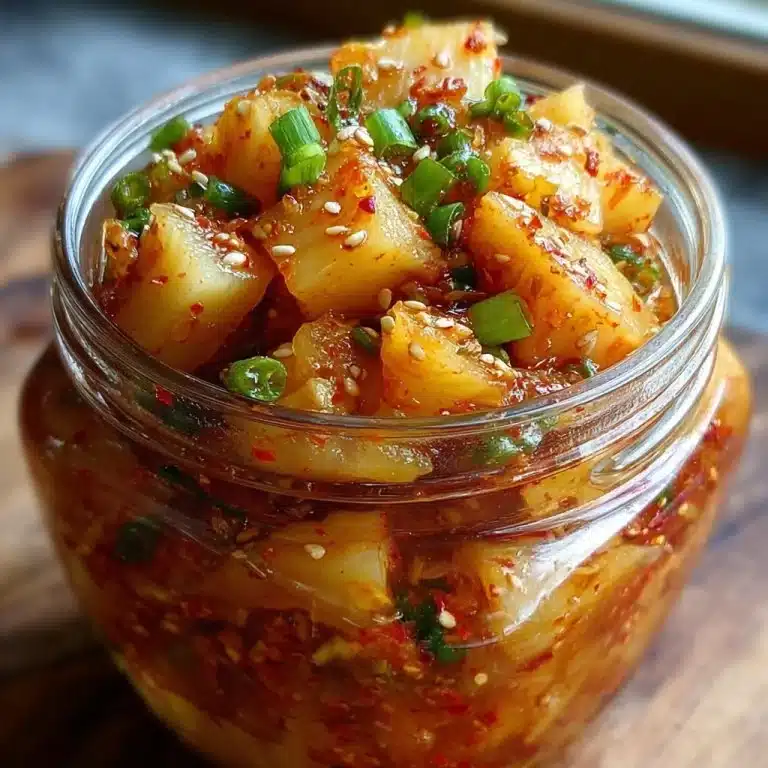
Transfer the mixed ingredients into a clean, airtight jar, pressing down firmly to eliminate air bubbles. Leave about an inch of space at the top; the contents will expand as they ferment.
Step 6: Ferment
Seal the jar without screwing it tightly, allowing gases to escape. Leave it at room temperature for 24 hours. Check daily; a pleasant tang indicates fermentation is happening!
Step 7: Store in Fridge
After 24 hours, move the jar to the refrigerator to slow down fermentation. Enjoy your kimchi within 1–2 weeks for the best flavor.
How to Serve
- Presentation: Serve in a colorful bowl to showcase the vibrant hues.
- Accompaniments: Pair it with grilled meats, rice, or tacos for a flavor boost.
- Portions: Offer small side portions as a refreshing kick to meals.
- Beverage Pairing: Enjoy with refreshing drinks like iced tea or beer.
Your Fermented Pineapple Kimchi will be a crowd-pleaser!
Additional Tips
- Experiment with adding fruit like mango for a unique twist.
- For a saltier flavor, adjust the amount of fish sauce.
- Serve with sesame seeds for an elegant finish.
Recipe Variations
- Spicy Mango Kimchi: Swap half the pineapple with diced mango for a tropical twist.
- Herbed Pineapple Kimchi: Add fresh cilantro or mint for an interesting flavor combination.
- Smoky Version: Include ¼ teaspoon of smoked paprika for a deeper flavor.
Freezing and Storage
- Storage: Keep the fermented kimchi in the refrigerator for up to 2 months.
- Freezing: For longer shelf life, freeze in airtight containers for up to 6 months. Thaw in the refrigerator before serving.
Special Equipment
- Clean glass jar with a tight-sealing lid
- Cutting board
- Sharp knife
- Mixing bowl
- Measuring cups and spoons
FAQ’s
1. Can I use frozen pineapple?
Yes! Frozen pineapple works, but it may not have the same crunch after thawing.
2. Is this recipe suitable for special diets?
This kimchi is generally gluten-free, and you can make it vegan by using soy sauce or miso instead of fish sauce.
3. Can I make this ahead of time?
Absolutely! Kimchi tastes even better after a few days in the fridge.
4. Can I customize the heat level?
Yes! Add more or less gochugaru to your preference.
5. Are there alternate cooking methods?
This recipe is a no-cook dish, focusing on fermentation rather than cooking.
Conclusion
Fermented Pineapple Kimchi offers a delightful combination of sweet and spicy flavors, perfect for enhancing various meals. With its unique taste and vibrant colors, it is an impressive addition to any occasion, from casual family dinners to exciting parties. So, gather your ingredients, follow the simple steps, and enjoy the delicious rewards of making this fantastic dish at home!




Did you make this recipe?
Share a photo and tag us, we can’t wait to see what you’ve made!